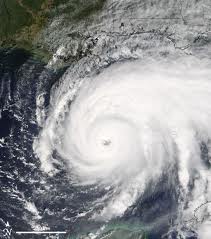
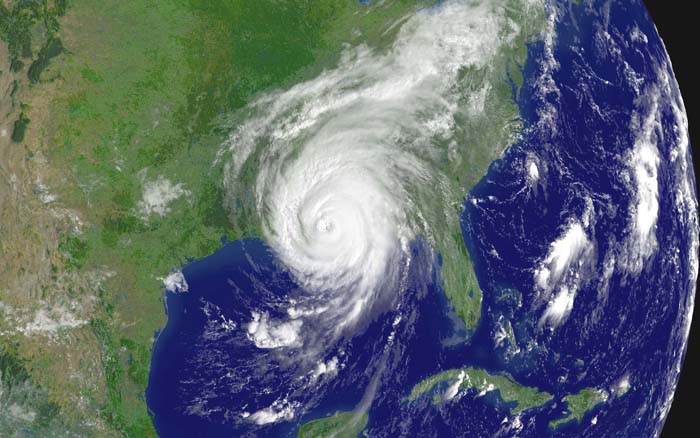
You may remember having heard about Hurricane Patricia last Fall. A picture of Hurricane Patricia as it approached the west coast of Mexico is shown below (I haven't been able to track down the original source of this photograph).
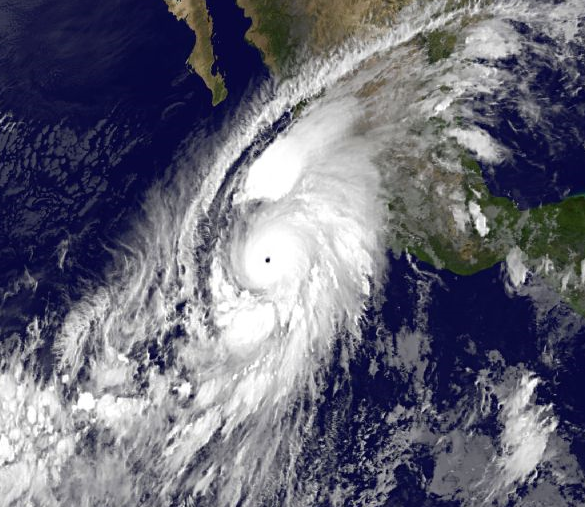
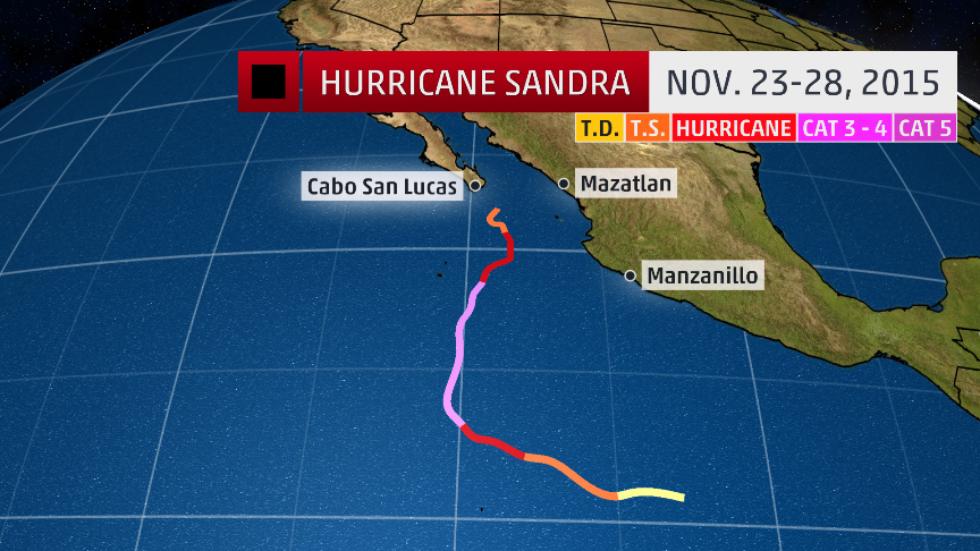
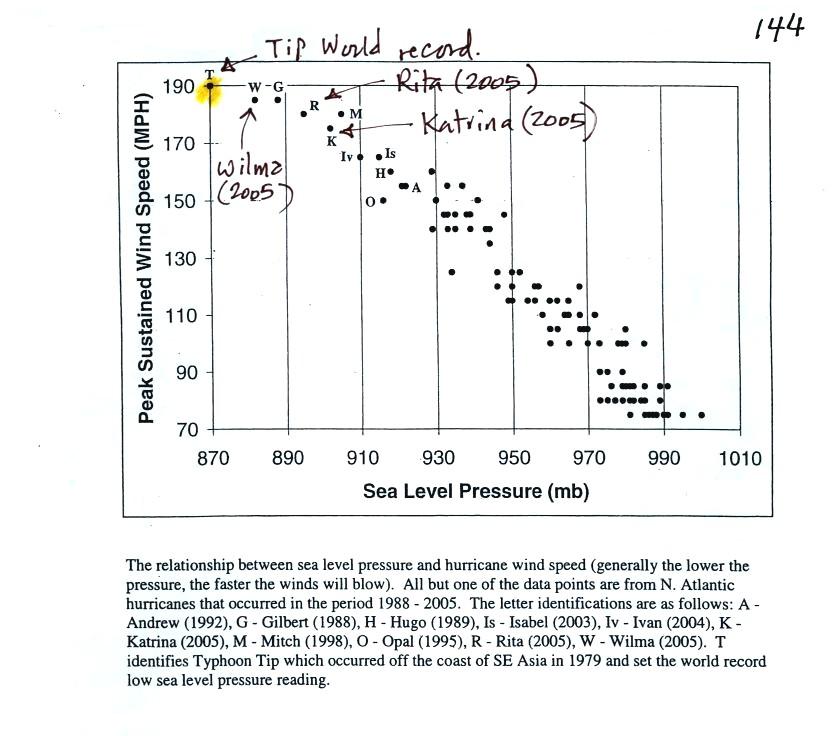
Sustained winds intensified from 85 MPH to 200 MPH in a 24-hour period (Oct. 23-24). Minimum sea level pressure in Patricia dropped to 872 mb, a new record for the Western Hemisphere.
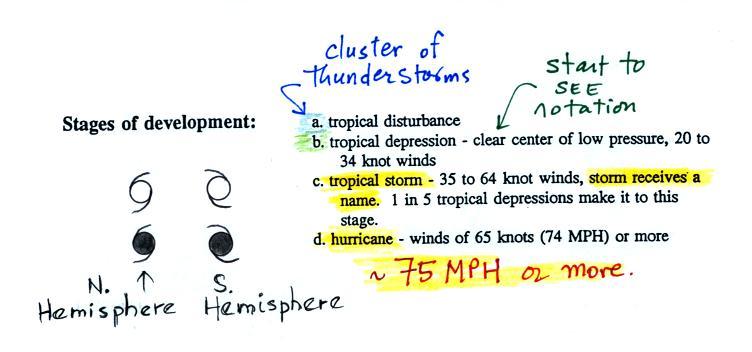
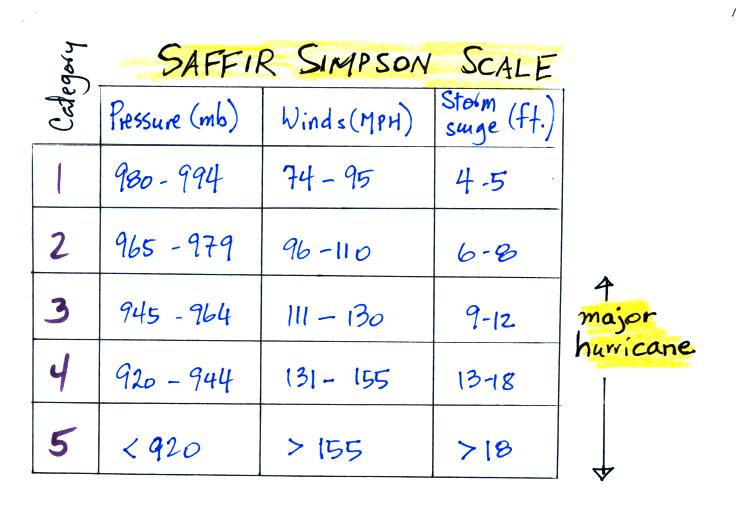
The storm made landfall on Oct. 23. At that time sustained winds were estimated at 165 MPH, still a Category 5 storm on the Saffir Simpson Scale. The hurricane missed the large cities of Manzanillo and Puerto Vallarta. The intense center of the hurricane was pretty small (about 15 miles in diameter). Because the storm was moving quickly and weakened once it have moved past coastal mountains in Mexico the hurricane caused much less damage than had been feared.
Here is an interesting report about Hurricane Patricia and 7 other hurricanes that made landfall in the US or Mexico as Category 5 storms.
Death and damage information from "superstorm Sandy" in 2012 is not included in the table above because the storm had become an extratropical cyclone by the time it struck New Jersey and New York. Overall the storm (both as a hurricane and an extratropical cyclone killed about 235 people and caused about $75 B in damage) in the US and countries in the Caribbean.