|
|
|
|
| Similarities |
| both types of storms
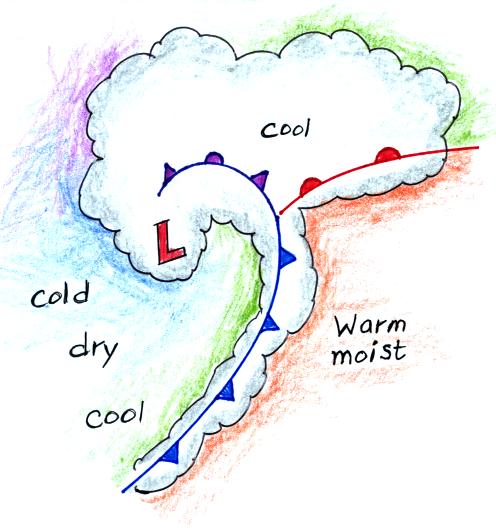
have low pressure centers (the term cyclone refers to winds blowing around low pressure) |
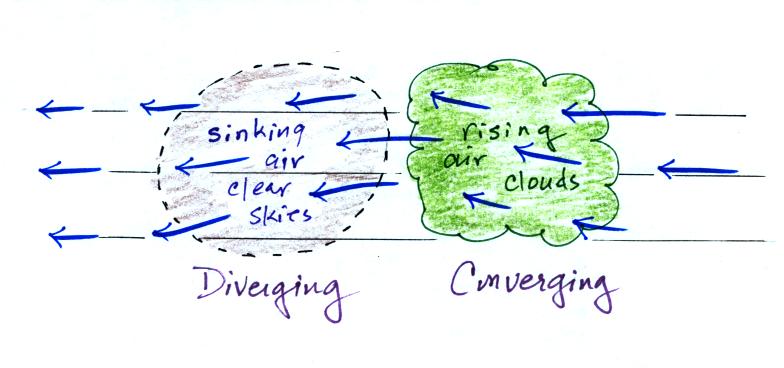
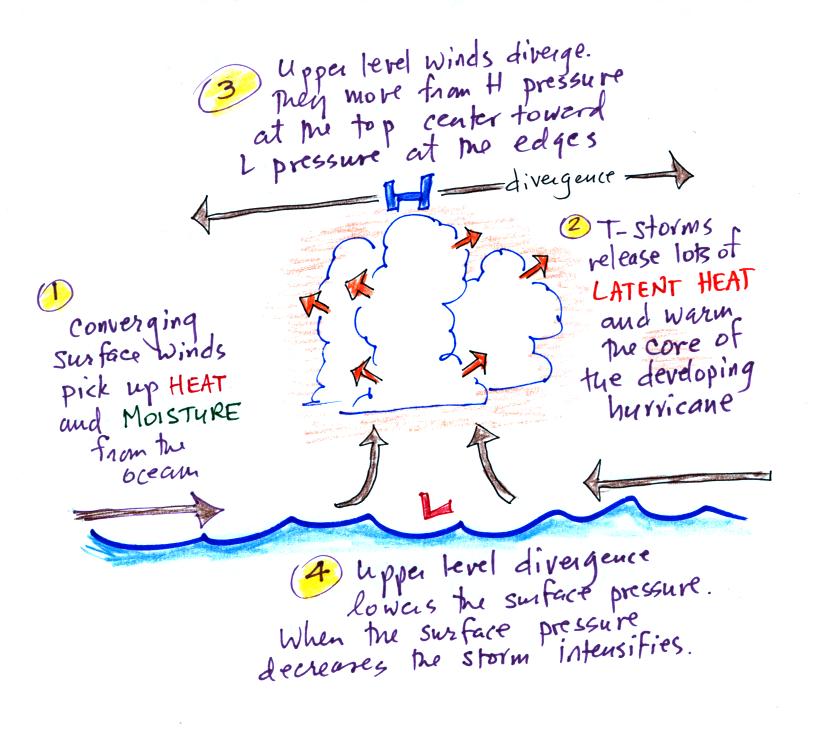
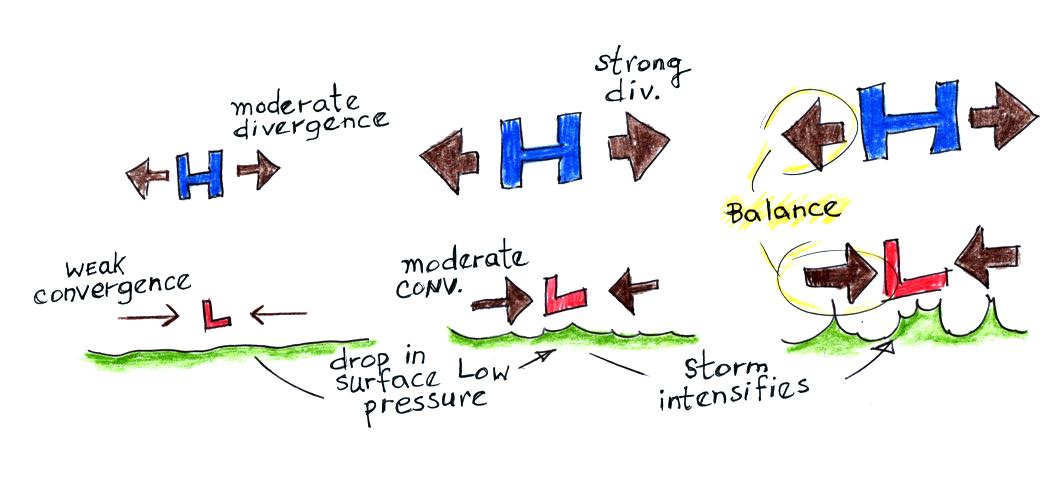
| upper level divergence
is what causes both types of storms to intensify (intensification means the surface low pressure gets even lower) |
| Differences
(the order may differ from that given in class) |
|
| 1. Middle latitude
storms are bigger, perhaps 1000 miles in diameter (half the US) |
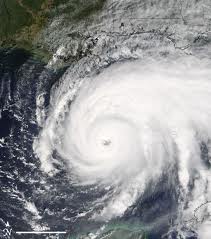
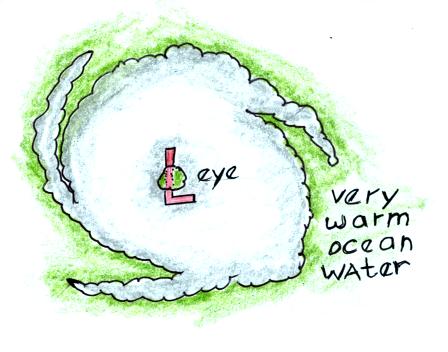
1. Hurricanes are
smaller, 100s of miles in diameter (fill the Gulf of Mexico) |
| 2. Formation can occur
over land or water |
2. Can only form over
warm ocean water weaken rapidly when they move over land or cold water |
| 3. Form at middle (30o
to 60o) latitudes |
3. Form in the sub
tropics, 5o to 20o latitude |
| 4. Prevailing westerlies
move these storms from west to east |
4. Trade winds move
hurricanes from east to west |
| 5. Storm season: winter
to early spring |
5. Storm season: late
summer to fall (when ocean water is warmest) |
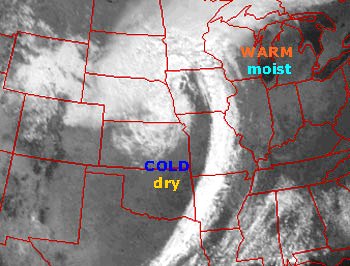
| 6. Air masses of
different temperatures collide along fronts |
6. Single warm moist air
mass |
| 7. All types of
precipitation: rain, snow, sleet freezing rain |
7. Mostly just rain,
lots of rain (a foot or more) |
| 8. Only an occasional
storm gets a name (becoming a little more common) ("The
Perfect Storm", "Storm of the Century", etc.) |
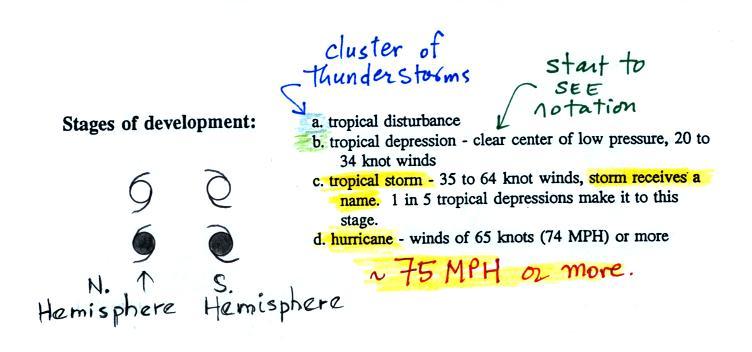
8. Tropical storms &
hurricanes gets names |

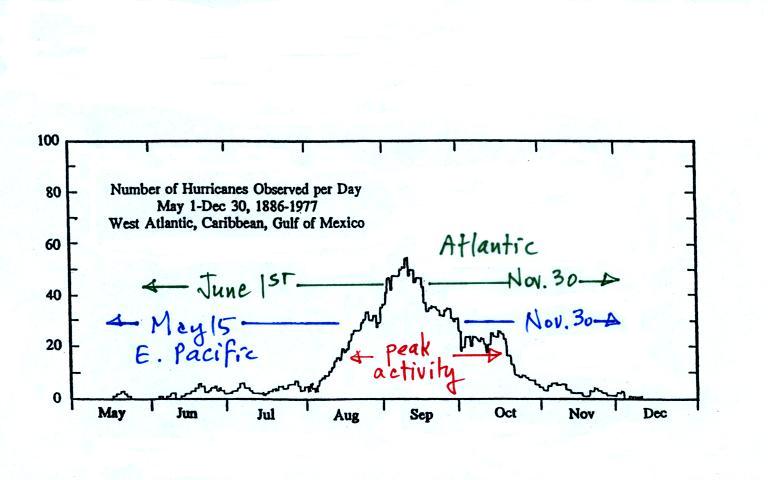
| Normal hurricane activity in the Pacific | Normal hurricane activity in the Atlantic |
| 16
tropical storms per year 8 reach hurricane strength 0 hit the US coastline |
10
tropical storms per year 6 reach hurricane strength 2 hit the US coastline |
| 2005 Atlantic hurricane season |
| 28 named storms (previous record was 21) 15 became hurricanes |
| 2017 Atlantic hurricane season |
| 178 named storms 10 became hurricanes |

| Scale |
Phenomenon |
| Beaufort |
Wind speed |
| Fujita |
Tornado intensity |
| Kelvin |
Temperature |
| Richter |
Earthquakes |
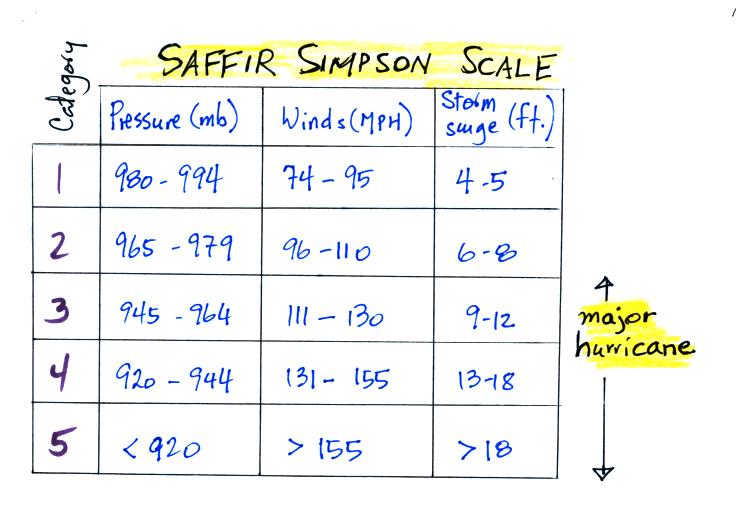
| Saffir-Simpson |
Hurricane intensity |